I’ve always had a strong sense of what felt right—and what didn’t. From a young age, questions of justice and fairness mattered to me, not abstractly but in everyday situations. At school, at university, at work, and in private life, I often found it difficult to stay silent when someone was treated unfairly. That didn’t always make me popular. I’ve been called “woke” or “annoying”. But more often than not, it simply meant I said something when others didn’t.
Speaking… and sometimes not
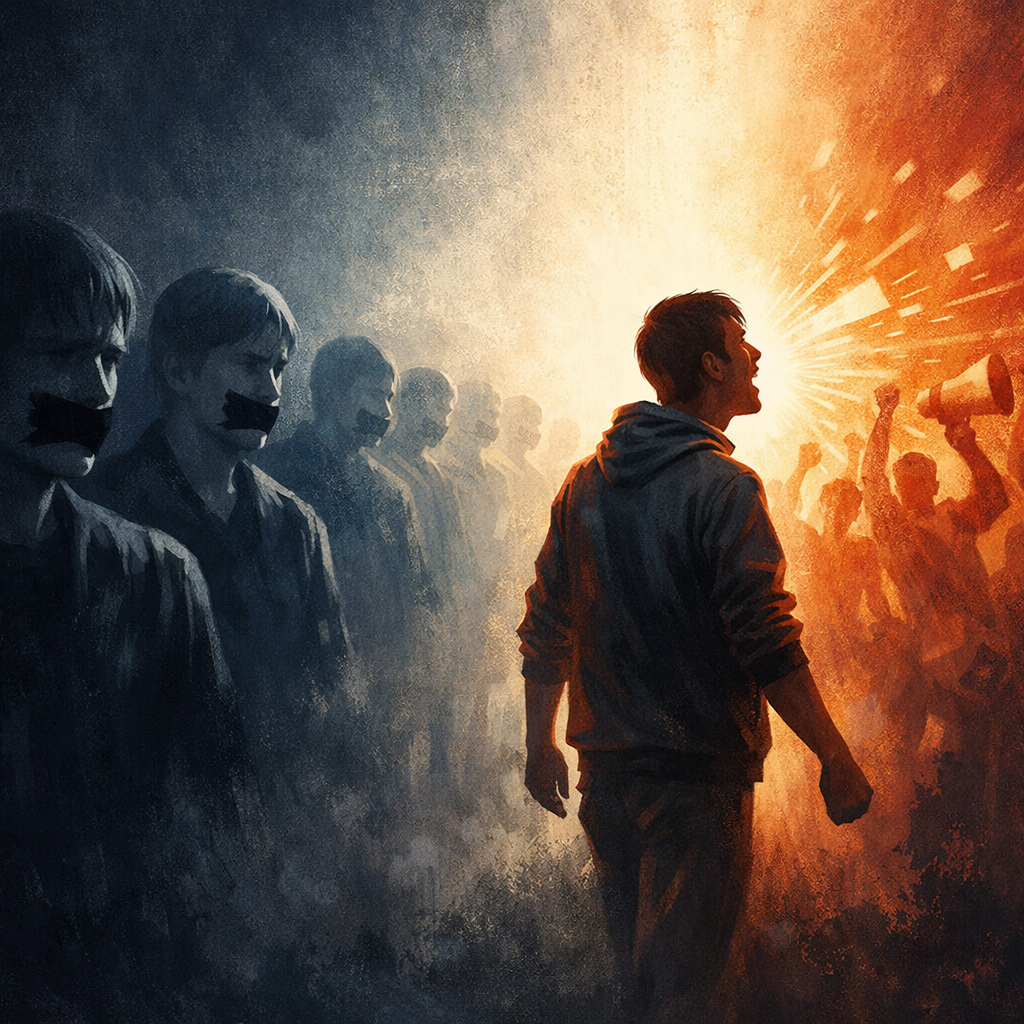
Over time, this became a pattern. When a line was crossed, I would step in—not loudly, not aggressively, but clearly. Sometimes that came at a cost. At the same time, I learned that speaking up isn’t always straightforward. Sometimes doing more can make things worse for the person you’re trying to support. That tension stayed with me.
A feeling that something changed
Growing up, we learned about racism, antisemitism, exclusion, and hate—and that these were not negotiable topics. Over time, however, I’ve felt that some of these lines became less clear. Not because people suddenly changed, but because certain narratives became more visible again.
At the same time, many thoughtful people chose not to engage. They took the “high road”. I understand that instinct—I’ve shared it. But I’ve also started to wonder whether that sometimes means leaving the field open.
During COVID, this became more visible. Discussions became more emotional and louder. Some tried to explain and add nuance, others relied on simpler messages. And often, the louder voices reached more people.
New voices, new forms
Today, speaking up takes new forms. A younger generation uses humor, creativity, and everyday objects to express positions—sometimes subtly, sometimes boldly, but often in ways that are both accessible and powerful.
I’ve come across voices like Elisa Gez, Abbude, or Olivier Caffè—each with their own way of being heard. Some use humor, others creativity, others simply consistency. Different approaches, but a shared intention: not to remain silent.
At the same time, visibility comes with risks—backlash, exposure, even threats. Speaking up today is not only more visible, but also more vulnerable.
And sometimes, speaking up doesn’t only mean talking. It can also mean showing support in small, tangible ways—buying a coffee from Olivier Caffè, wearing a "Migrantengöre" beanie, an “Ich gender, und jetzt?” hoodie, or simply a rainbow wristband. Carrying a message forward, quietly but visibly.Today, speaking up takes new forms. A younger generation uses humor, creativity, and everyday objects to express positions.
A return
This doesn’t mean becoming the loudest voice. But it does mean not defaulting to silence. In a way, this is a return—not to something new, but to something that was always there.
I don’t expect everyone to agree. That’s not the point.
The point is: At some point, silence isn’t neutral anymore.
Whether you speak up or support those who do—maybe it starts with finding your own voice.